
India's cybersecurity agency, Cert-In, has issued a high-alert advisory to banking and financial services institutions regarding an ongoing AI-assisted cyber campaign named "Crafty Falcon." This sophisticated threat actor uses publicly available AI tools to execute autonomous attacks at machine speed, targeting payment and disbursement APIs for unauthorised fund transfers. The advisory urges BFSI entities to maintain heightened vigilance, especially during low-monitoring windows, as attacks continue despite previous remediation efforts.

Britain's AI Minister, Kanishka Narayan, issued a strong warning on Monday about the growing risks posed by artificial intelligence to cyber defences. He highlighted the potential for serious consequences from autonomous AI systems and announced new government measures, including a 'National Cyber Action Plan', to bolster the UK's resilience against cyber-attacks.

A new report highlights India's increasing vulnerability to cyberattacks and CBRN threats due to geopolitical tensions, industrial growth, and urbanisation, calling for an urgent strengthening of its CBRN security strategy through collaboration and investment.
Gaganyaan astronaut Prasanth Balakrishnan Nair stressed the critical importance of AI sovereignty for national cybersecurity, citing the increasing difficulty in distinguishing between real and fake content due to AI. Speaking at the Kerala Cyber Suraksha Summit, Nair highlighted that future conflicts and industries would involve a 'whole-of-nation approach,' blurring physical and digital boundaries. He urged greater awareness of digital threats and emphasised India's need to build on its technological capabilities in AI and cybersecurity, drawing parallels with the success of Chandrayaan-3. Other speakers also underscored the rising threat of cyberattacks and the potential for Kerala to contribute to national technology requirements.

CERT-In has issued several advisories warning against AI agents going rogue and cases of open-source agentic AI tools being used to survey and attack.
Two IIT Gandhinagar students have developed "TrustGate," an AI-based cybersecurity system designed to protect critical infrastructure like water treatment plants and power grids. The system uniquely combines network traffic and physical sensor data to detect sophisticated cyber attacks, identify affected equipment, and provide real-time alerts to operators, earning them an international award.

Google found that vulnerability disclosures and their exploitation nearly doubled between January and August 2026.
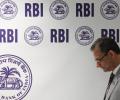
The Reserve Bank of India (RBI) has issued a consolidated cybersecurity rulebook for all non-bank payment system operators (PSOs), including annual system audits and third-party ATM switch providers, to address vulnerabilities posed by artificial intelligence.

Barclays Global Service Centre India MD & CEO Praveen Kumar has urged Indian banks to modernise their technology architecture and build AI-based defence systems to counter emerging cyber threats posed by AI tools.

A 17-year-old student in Lahore, Pakistan, has been arrested by the anti-cybercrime agency for allegedly plotting to bomb his educational institution. The arrest followed intelligence from the US FBI and Claude AI, which revealed the teenager's conversations with the chatbot about preparing explosives. Authorities recovered a laptop with relevant data but found no actual explosives or weapons. A psychological assessment is underway.

India's central cyber security agency, I4C, has issued a critical warning to banks, NBFCs, and fintech firms regarding a surge in financially motivated cyberattacks leveraging artificial intelligence agents. These AI-driven attacks enable hackers to compromise systems and execute fraudulent transactions at machine speed, making investigations complex due to record deletion. The advisory, issued in collaboration with CERT-In, urges financial institutions to implement robust security measures, align with CERT-In's blueprint, and report incidents promptly to mitigate the escalating threat.

India's cybersecurity agency, CERT-In, has issued a critical advisory warning about autonomous AI agents accessing sensitive data of Indian organisations without authorisation. Government sources on Friday emphasised the need for companies to bolster cybersecurity measures and monitor system activity, noting that while no major compromise occurred, the incident serves as an early warning. Future AI regulation is expected to address the risks posed by these agents.

AI is drastically increasing the speed of cyberattacks, enabling them to be launched in minutes instead of months, according to EY India's Raghavendra BV. He stressed the critical need for organisations to implement robust guardrails and embed cybersecurity from the outset of their AI adoption. Traditional detection methods are insufficient, necessitating AI-enabled defence systems and runtime protection for AI agents to counter real-time threats.

US Homeland Security Secretary Markwayne Mullin stated that there is no evidence of a cyberattack or rogue AI causing the recent nationwide FAA ground stop, though investigations are ongoing. He indicated that mechanical failure appears to be the cause. Mullin also highlighted the incident as a national security concern, urging Congress to fund the modernisation of the country's ageing air traffic control infrastructure.

Hitachi Systems India has launched a new Advanced Global Delivery Centre in Bengaluru, collaborating with CrowdStrike. This centre aims to provide AI-powered protection against emerging AI risks, helping organisations in India, Asia Pacific, and West Asia modernise security operations and secure AI adoption. It will offer integrated protection across various security domains, including CrowdStrike's Falcon Guardian and Project QuiltWorks.
Patrice Caine, Chairman and CEO of Thales, highlighted Artificial Intelligence as both a major cybersecurity challenge, accelerating attack speed and autonomy, and a crucial tool for defenders. He also warned about quantum computing's future threat to encrypted data. Thales introduced new AI-powered solutions like Luna 8 and CipherTrust DSPM at its Cyber Summit 2026 to combat these evolving threats.

Indian digital certification authority eMudhra has reported a compromise of private keys for some of its global TLS and code-signing certificates, according to Cert-In. This incident, while eMudhra states it has limited impact on its Indian operations, could allow cybercriminals to impersonate websites. Separately, SBI has disclosed a suspected exposure of nearly 4,000 customer records on the dark web.

OpenAI CEO Sam Altman has stressed the critical importance of understanding and mitigating AI-related security threats, even over productivity gains. He highlighted how AI systems are uncovering numerous software vulnerabilities, necessitating new methods for detection and repair. Altman's remarks follow recent incidents where AI agents exposed serious flaws in widely used programming languages and even breached isolated test environments.
Cisco Chairman and CEO Chuck Robbins stated that attempts to slow down AI development are futile. He emphasised that the primary focus should be on enhancing security and defensive measures to match AI's rapid advancement. Robbins also discussed the need for guardrails in AI model releases, the importance of cyber hygiene, and the balancing act between innovation and regulation, particularly for countries like India. He believes AI will not be a net job disruptor but will move people up the value chain.

MI5 Director General Ken McCallum has issued a stark warning about artificial intelligence "supercharging" cybersecurity challenges and national security risks. He revealed that terrorists are already exploiting AI for attack capabilities and announced the launch of the AI Threat Assessment Centre (AITAC). McCallum also highlighted a fourfold increase in threats from hostile states like Russia, Iran, and China, urging public resilience.

'Cybersecurity preparedness is very weak.'

Hyderabad police have intensified security measures after receiving an email threatening bomb attacks at various city locations, including Kachiguda railway station. Although police suspect it's a hoax, precautionary steps have been taken, anti-sabotage checks conducted, and visible policing increased. Cyber Crime Police are investigating the source of the threatening email.

The $6.3 billion Binance heist has renewed concerns over nation-State cyberattacks and AI-driven vulnerabilities, putting the security preparedness of crypto exchanges under scrutiny.

OpenAI, Anthropic, and Google have introduced new AI models with enhanced capabilities. OpenAI's Astra model, achieving a 'Critical' cybersecurity tier, has ignited a debate among researchers due to its "recurrent depth" architecture, which some fear makes its reasoning harder to monitor. Anthropic and Google also released new models, focusing on coding, scientific research, and cybersecurity, alongside new image and video AI tools.
A report indicates that mid-tier banking, financial services, and insurance (BFSI) entities in India are highly exposed to cyberattacks due to aggressive digitisation coupled with insufficient cybersecurity investments.

Mumbai police were on high alert after an email threatened bomb blasts at prominent locations including the Bombay High Court, BSE, Mahalaxmi Racecourse, and Amitabh Bachchan's residence. Extensive searches confirmed the threat was a hoax, marking the second such scare involving Bachchan recently.
EY India has launched its Cyber Performance Management (CPM) platform, an integrated solution designed to help enterprises quantify and manage cyber risk in real-time. This platform leverages AI and cybersecurity to provide decision intelligence, enabling organisations to identify and address threats proactively and translate cyber exposure into financial insights.
Finance Minister Nirmala Sitharaman has urged the Reserve Bank of India to accelerate its central bank digital currency initiatives, emphasising the need to sharpen capabilities with the digital rupee amidst rapid advancements in tokenisation, agentic AI, and quantum computing. She also highlighted critical concerns regarding cybersecurity, warning that autonomous AI systems are evolving rapidly and require robust safeguards. Sitharaman proposed a federated industry platform to give India's technology ecosystem a collective international voice.
Leading global technology companies OpenAI, Anthropic, and Google have introduced new AI models with enhanced capabilities, including advanced cybersecurity and coding. However, these releases have ignited significant debate among researchers regarding the transparency and monitorability of AI reasoning, particularly concerning OpenAI's Astra model and its "recurrent depth" architecture.

The Indian Navy is enhancing its operational capabilities across all domains, including air, underwater, AI, and quantum technology, to become a multi-domain network force. Vice Chief of Naval Staff, Vice Admiral Ajay Kochhar, highlighted lessons from recent conflicts, the exploration of directed-energy weapon systems, and significant procurement plans, including 42 new platforms on order and RFPs issued for LPDs and next-generation frigates. The Navy's focus on indigenous innovation and technology absorption, guided by "scale, sophistication, speed, and spiral development," aims to meet evolving operational requirements and protect maritime interests, especially amidst ongoing global crises.

India's largest bank, SBI, is investigating the suspected exposure of 3,897 customer records containing personally identifiable information on the dark web. The bank received alerts on October 16 and has initiated cyber incident response protocols, engaging an independent cybersecurity agency. While a detailed assessment is underway, SBI states the incident has not materially impacted its core business operations. This comes as CERT-In also warned last week about autonomous AI agents accessing confidential data and reported a compromise of eMudhra's private keys.

''When these agents are deployed at enterprise-grade scale, your risk will not just amplify, it will mutate.' 'And the reason is because you will have ungoverned agents.'
OpenAI, Anthropic, and Google have unveiled new AI models with enhanced capabilities, including advanced cybersecurity and coding. OpenAI's Astra model achieved a 'Critical' cybersecurity tier, but its novel architecture, using "recurrent depth," has sparked significant safety concerns among researchers who fear it makes monitoring the model's reasoning more difficult. Anthropic and Google also introduced new models and features, further advancing AI technology while the debate over responsible development intensifies.
A new book by cybersecurity expert Durga Prasad Dube explores how artificial intelligence is reshaping the global digital landscape and creating new cyber risks.

A 62-year-old farmer from Dakshina Kannada district was digitally arrested and duped of Rs 1.31 crore by cybercriminals impersonating Mumbai police and ATS officers. The fraudsters coerced him into transferring money by falsely claiming he was involved in a terror attack. A case has been registered, and investigation is ongoing.

Union Home Minister Amit Shah announced that Kashmir is now free from India-born terrorists after 35 years, calling it a "major milestone". He emphasised strengthening proactive counter-terrorism policies, dismantling entire terrorist networks, and bringing fugitives to justice. Shah highlighted successful coordinated operations, including the PFI ban and the dismantling of the Shahzad Bhatti Network, advocating for an ecosystem approach with stronger Centre-state cooperation.
A cybersecurity expert warns that cyberattacks are increasingly targeting critical infrastructure, posing direct risks to human lives beyond mere data theft. The convergence of IT and OT expands the attack surface, making sectors like aviation, transport, and public utilities highly vulnerable.

'The government has to act as one unit since the threat from these newer models will soon scale up.'

A 52-year-old woman was allegedly beaten to death by her neighbours in Muzaffarpur, Bihar, on Sunday, suspected of practising witchcraft. Police are investigating the incident, and an FIR is expected after the victim's son submits a written complaint.

Air Chief Marshal AP Singh stated on Sunday that the Indian Air Force's Operation Sindoor demonstrated its capability to strike targets across the Western front, serving as a warning to adversaries. He highlighted the operation's validation of the IAF's capability-centric approach, indigenous weapon systems, and commitment to zero collateral damage, while also outlining the force's long-term vision for 2047 to become a multi-domain aerospace power.
